
Can Botox Really Help TMJ and Jaw Tension?
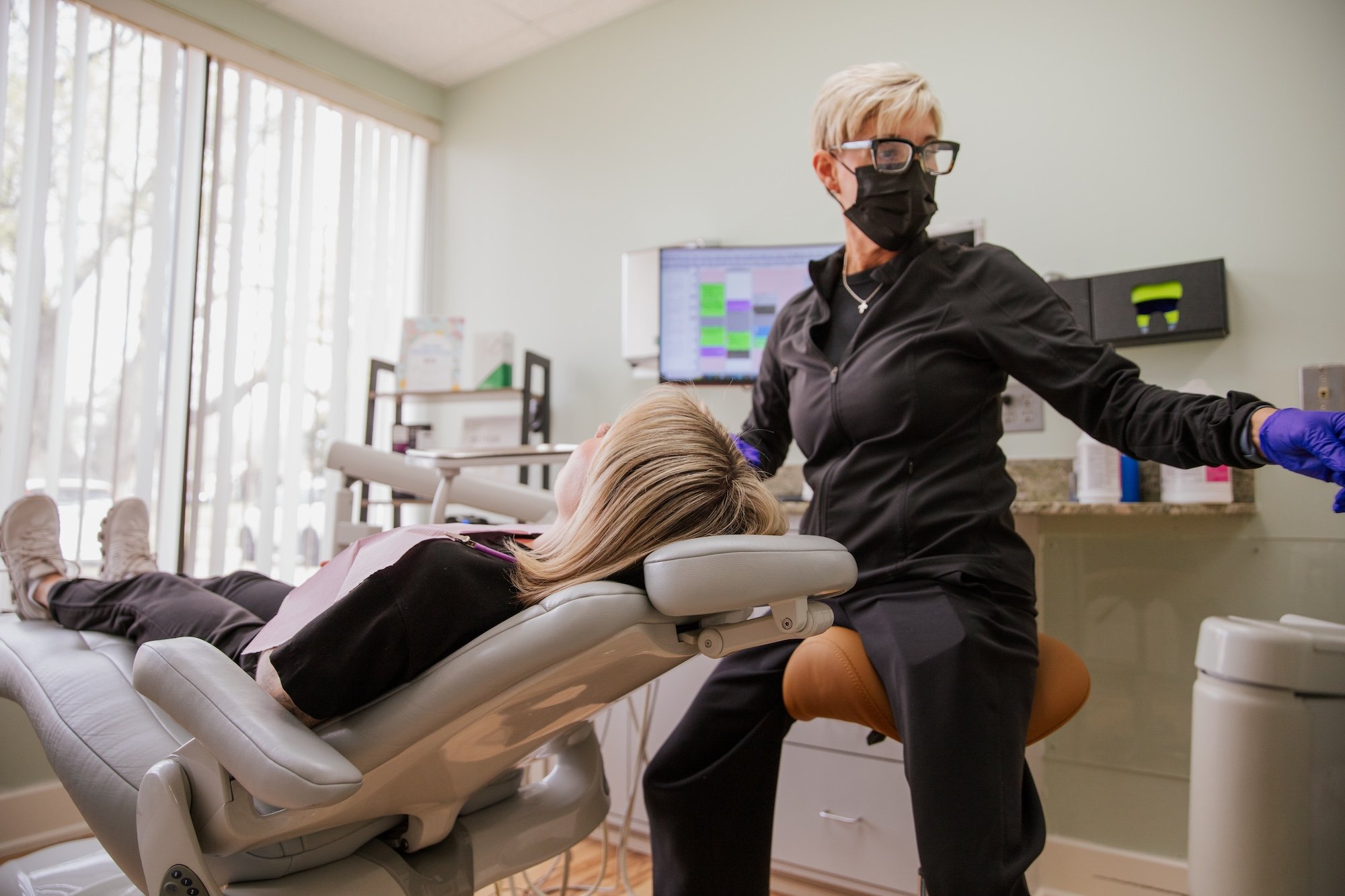
Short answer: yes, for a lot of people it can. If your jaw aches in the morning, your teeth feel sore from clenching, or you get headaches that start at your temples, the problem is often an overworked jaw muscle. Botox relaxes that muscle so it stops gripping so hard. At Tulsa Time Dental Design, we use Botox and facial aesthetics as one tool for jaw tension, alongside the bite and TMJ care we already handle in house.
Here is the part most people do not realize: Botox is not just a wrinkle treatment. The same shot that softens a frown line can calm a jaw muscle that has been clenching all night.
Why your jaw hurts in the first place
The big muscle on the side of your jaw is called the masseter. It is one of the strongest muscles in your body for its size. When you clench or grind, usually in your sleep, that muscle works overtime. Over weeks and months it gets tight and sore, like any muscle you overuse.
That tension shows up in a few ways:
A dull ache in the jaw, worse in the morning
Headaches that start near the temples
Sore or sensitive teeth from grinding
A jaw that feels tired by the end of the day
Clicking or tightness when you open wide
This is the muscle side of what people call TMJ or TMD. The joint itself can be involved too, which is why we look at the whole picture rather than treating one symptom. You can read more on our TMJ and TMD treatment page.
How Botox calms an overworked jaw
Botox works by telling a muscle to relax. When we place a small amount in the masseter, the muscle can no longer clench at full force. It still works fine for eating and talking. It just stops the hard, grinding squeeze that causes the pain.
Most patients notice the difference within a week or two, and the effect builds over the first month. Because the muscle is doing less damage, two things tend to happen: the jaw pain eases, and the teeth get a break from the constant grinding pressure.
The treatment itself is quick. A few small injections on each side, no numbing needed for most people, and you walk out and go back to your day. There is no downtime.
Botox is one option, not the only one
We want to be straight with you. Botox treats the muscle, not the cause. If the real driver is a bad bite or nighttime grinding, the tension can creep back as the Botox wears off, usually around three to four months later.
That is why we often pair it with other care. A custom night guard protects your teeth and can reduce grinding. Adjusting the bite helps in some cases. For many Tulsa patients, the best plan is Botox for fast relief plus one of these longer-term fixes so the problem does not just come back. We go deeper on the joint side of this in our guide to expert TMJ treatment for jaw pain in Tulsa.
The advantage of having it all under one roof is simple. The same team that checks your bite and builds your night guard also does the Botox. Nobody gets handed off to another office, and nobody is guessing about your dental history.
Is jaw Botox right for you?

It tends to help most when:
You clench or grind, especially at night
Your jaw muscles feel tight or sore rather than the joint locking up
You get tension headaches around the temples
You have tried a night guard alone and still have muscle pain
It is less likely to be the full answer if your main problem is the joint clicking, locking, or popping out of place. In those cases we look at the joint first. The only way to know which camp you are in is an exam, which is exactly what a consultation is for.
Talk to a Tulsa dentist who treats the whole jaw
If your jaw has been bugging you, you do not have to live with it. Come in, let us look at your bite and your muscles, and we will tell you honestly whether Botox, a night guard, or a mix of both makes sense for you.
Call or text us at (918) 834-2330 to request a consultation, or send a message through our contact page.
Frequently asked questions
Does Botox for TMJ hurt? Most people feel a quick pinch and that is it. The needles are small and the appointment takes only a few minutes. No numbing is needed for most patients.
How long does it last? Usually three to four months. After that the muscle slowly returns to normal, so many patients come back a few times a year to stay ahead of the tension.
Will my face look different? Used for jaw tension, the dose is meant to relax the muscle, not change your look. Some patients who grind heavily notice a slightly slimmer jawline over time because the overbuilt muscle relaxes. Most see no change in appearance.
Can I still eat and chew normally? Yes. The muscle keeps enough strength for normal eating and talking. It just stops clenching at full force.
Is it covered by insurance? Botox for jaw tension is often considered cosmetic by dental and medical plans, so coverage varies. We will walk you through your payment and insurance options at your visit so there are no surprises.