
Implant-Supported vs Traditional Dentures in Tulsa: Which Is the Better Value?
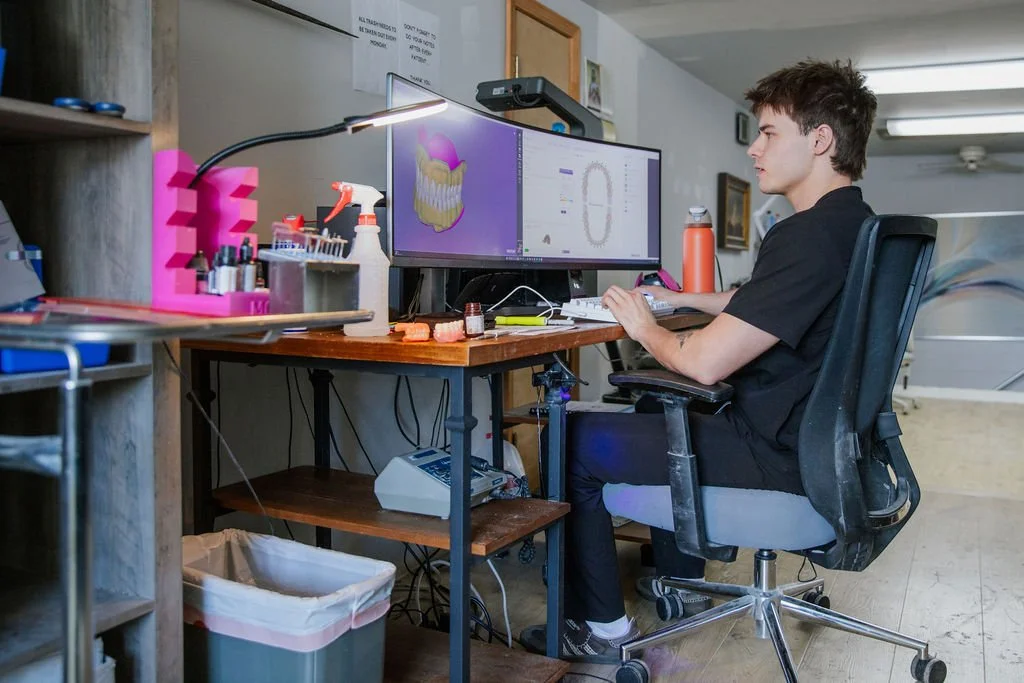
If you are looking at dentures in Tulsa, you have probably found two very different answers to the same problem. Traditional dentures rest on your gums. Implant-supported dentures snap onto a few dental implants. They both replace missing teeth, but they feel different, they last different amounts of time, and the way they cost you money is not what most people expect. This compares them fairly so you can pick the best value for your situation, not just the lowest price tag. Both are part of our dentures work, and we fit plenty of each.
The short version: traditional dentures cost less up front and are the right call for some people. Implant-supported dentures cost more at the start but hold in place, protect your jaw, and often cost less over the long run because you are not replacing and relining them as often. Which one is the better value depends on your jaw, your budget, and how you want to live day to day.
Traditional dentures: how they work
A traditional denture is a full set of teeth on an acrylic base that sits on your gums. The upper one uses suction against the roof of your mouth. The lower one rests on the ridge of your jaw. You take them out to clean them, and you use adhesive to help them stay put.
Where they shine: they are the lowest cost to get started, they are non-surgical, and for someone who wants teeth again without a procedure, they do the job.
The trade-offs people do not hear about up front: lower dentures in particular can slip, because there is less ridge to grip. Many people struggle to eat certain foods. And here is the big one. When teeth are gone, the jawbone underneath slowly shrinks because nothing is stimulating it. That is why a denture that fit great year one feels loose by year three and needs a reline or a remake. The bone is changing shape under it.
Implant-supported dentures: how they work
An implant-supported denture uses a few dental implants, small posts placed in the jaw, as anchors. The denture snaps onto them. Some are removable and snap on and off. Others are fixed and stay in, which is the All-on-4 approach for a full arch.
Where they shine: they hold. No slipping, no adhesive, and you can eat most of what you used to. Because the implants stimulate the jaw the way natural roots did, they slow the bone loss that makes traditional dentures loosen over time. Most people describe them as feeling much closer to real teeth. We went deeper on the upsides in the benefits of implant-supported dentures.
The trade-offs: they cost more up front, and getting the implants placed is a minor surgical procedure with a healing period. For most healthy patients that is very manageable, and because we place the implants and make the denture in house, you are not bouncing between a surgeon and a separate lab.
The cost question, told honestly
This is where "cheapest" and "best value" split apart.
Traditional dentures win on the sticker price. If your budget right now is the deciding factor, they are the accessible option, and there is no shame in that. A traditional denture that lets you smile and eat is a real solution.
But look at the whole timeline. Traditional dentures usually need relines every couple of years as the jaw shrinks, and a full remake every five to eight years or so. Those costs add up, and the fit is chasing a moving target the whole time. Implant-supported dentures cost more at the start, but the implants themselves can last decades, and you are not paying to fight bone loss every couple of years. Over ten or fifteen years, the gap between the two narrows, and for some people it flips.
We do not publish flat prices, because the number depends on how many implants you need, whether any teeth need to come out first, and which style of denture fits your case. What we will give you is a clear, itemized plan with no surprises, and we walk through financing so you can spread it out. A lot of patients who assumed implants were out of reach find the monthly number very workable once we lay it out.
So which is right for you?
Traditional dentures may be your best fit if your priority is the lowest upfront cost, you want to avoid any procedure, or you have health factors that make surgery a poor idea.
Implant-supported dentures may be your best fit if you are tired of slipping and adhesive, you want to eat normally, you want to protect your jawbone for the long haul, or you are looking at the total cost over many years rather than just day one.
The best way to decide is to see where your jawbone stands today, because that often points to the answer on its own. If you want the full background on denture types first, we wrote a complete guide for Tulsa residents.
Frequently asked questions
Are implant-supported dentures worth the extra cost? For many people, yes, because of fit, the ability to eat normally, and the protection against jawbone loss. For someone on a tight fixed budget who wants a non-surgical option, a well-made traditional denture is still a solid choice. It comes down to your priorities and your jaw.
Can I turn my current dentures into implant-supported ones? Sometimes an existing denture can be modified to snap onto implants, and sometimes a new one is a better result. We can tell you which after we look at your denture and your jaw.
How many implants does a denture need? A removable snap-in lower denture often uses two to four implants. A fixed full-arch set, like All-on-4, typically uses four per arch. The right number depends on your bone and the style you choose.
Do traditional dentures really cause bone loss? The dentures do not cause it, but they do not prevent it either. When tooth roots are gone, the jaw shrinks over time. Implants slow that down because they stimulate the bone the way roots did. That is the core reason implant-supported dentures hold their fit longer.
Get a real comparison for your mouth
If you are in Tulsa, Broken Arrow, Owasso, or Sand Springs and you are stuck between traditional and implant-supported dentures, come in and get a straight comparison built around your jaw and your budget. We do the implants and the dentures under one roof, so you get one plan and one team from start to finish. Call or text (918) 834-2330, or request a consultation and we will call you back.