
What Full-Arch Dental Implants Actually Are
If a dentist has told you that most of your upper or lower teeth need to come out, you have probably heard the phrase "full arch" and nodded along without anyone explaining it. Here is the plain version. A full arch is one complete row of teeth, top or bottom. Full-arch dental implants replace that entire row using a small number of implants in the jaw instead of one implant per tooth. If you are looking at this for a whole row, the All-on-4 approach is the version most people end up asking about, and we do that work here in the building.
You do not need ten or twelve implants to replace ten or twelve teeth. Four to six per arch, angled and placed where your bone is strongest, can carry a full set. That is the whole idea behind the approach, and it is why full-arch treatment became realistic for people who were told years ago that they were not implant candidates.
Full arch is a different job than a single implant
A single dental implant replaces one tooth. Post in the bone, abutment on top, crown on that. Straightforward, and it is the right answer when the teeth around it are healthy.
Full arch is a different problem. When a whole row is failing, replacing teeth one at a time gets expensive and slow, and the neighboring teeth often will not hold up long enough to make it worth it. So instead of thinking tooth by tooth, we plan the arch as one unit: where the good bone is, how many implants it takes to carry the load, and what the finished bite needs to look like. It is closer to engineering a bridge than fixing a pothole.
The two ways a full arch usually gets done
Both start with implants. What sits on top is the choice.
A fixed bridge on four implants. This is All-on-4. A full set of teeth is screwed onto the implants and stays there. You brush it in your mouth, you do not take it out, and it feels the closest to having your own teeth back. Most people who want to stop thinking about their mouth every day land here.
A snap-on implant denture. Fewer implants, and the denture clicks onto them and comes out for cleaning. It holds far better than a traditional denture and costs less to get into than a fixed bridge. The trade-off is that it is still something you remove.
Neither one is the "better" option in the abstract. It depends on your bone, your budget, and how much you care about taking something out at night. We will tell you which one your jaw actually supports before we ever talk about which one you like.
Who turns out to be a candidate
More people than expect to be. The usual disqualifier people worry about is bone loss, and it is a real factor, but the angled placement used in full-arch treatment is specifically designed to find and use the denser bone toward the front of the jaw. That is why a lot of patients who were told they needed extensive grafting somewhere else find out they do not need nearly as much. We went into that in detail in how All-on-4 differs on bone grafting.
What we actually check: how much bone you have and where, whether any active gum infection needs treating first, whether your bite is doing something that would overload the implants, and whether anything medical needs managing around the procedure. Smoking and uncontrolled diabetes both slow healing, and we will talk honestly about that rather than pretend it does not matter. If you want the fuller candidacy walkthrough, we wrote one.
What the process looks like
Most full-arch cases run like this.
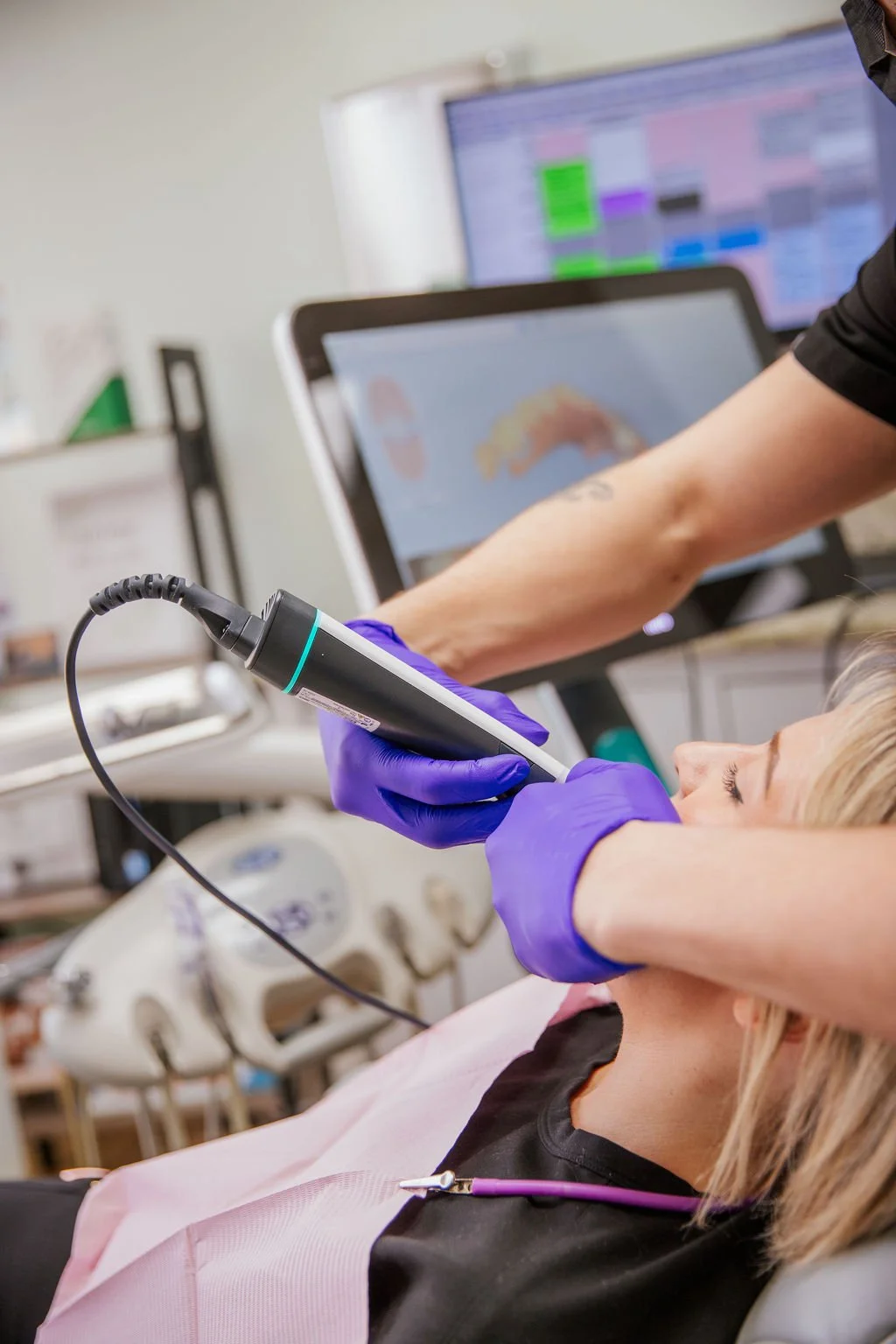
A consult with a scan first. We take a panoramic x-ray and a 3D digital scan of your mouth, and you leave knowing what your bone can support and what the plan would be. No guessing, no "we will figure it out when we are in there."
Then the surgery day. Any remaining teeth in that arch come out, the implants go in, and a temporary set of teeth goes on the same day. You do not leave without teeth. If the idea of that day is what has been stopping you, sedation is available and most patients remember very little of it.
Then healing, roughly three to six months, while the bone grows around the implants and locks them in. You are wearing the temporary set through this whole stretch and eating a modified diet that opens back up as you go.
Then the final teeth. Once the implants are solid, we make and fit the permanent set. That is the one built to your final bite, and it is the one you keep.
Why we care that it all happens here
At a lot of practices, a full-arch case means an oral surgeon in one office places the implants, a separate lab somewhere else makes the teeth, and your general dentist coordinates between them. Three parties, three schedules, and when the fit is off, nobody quite owns it.
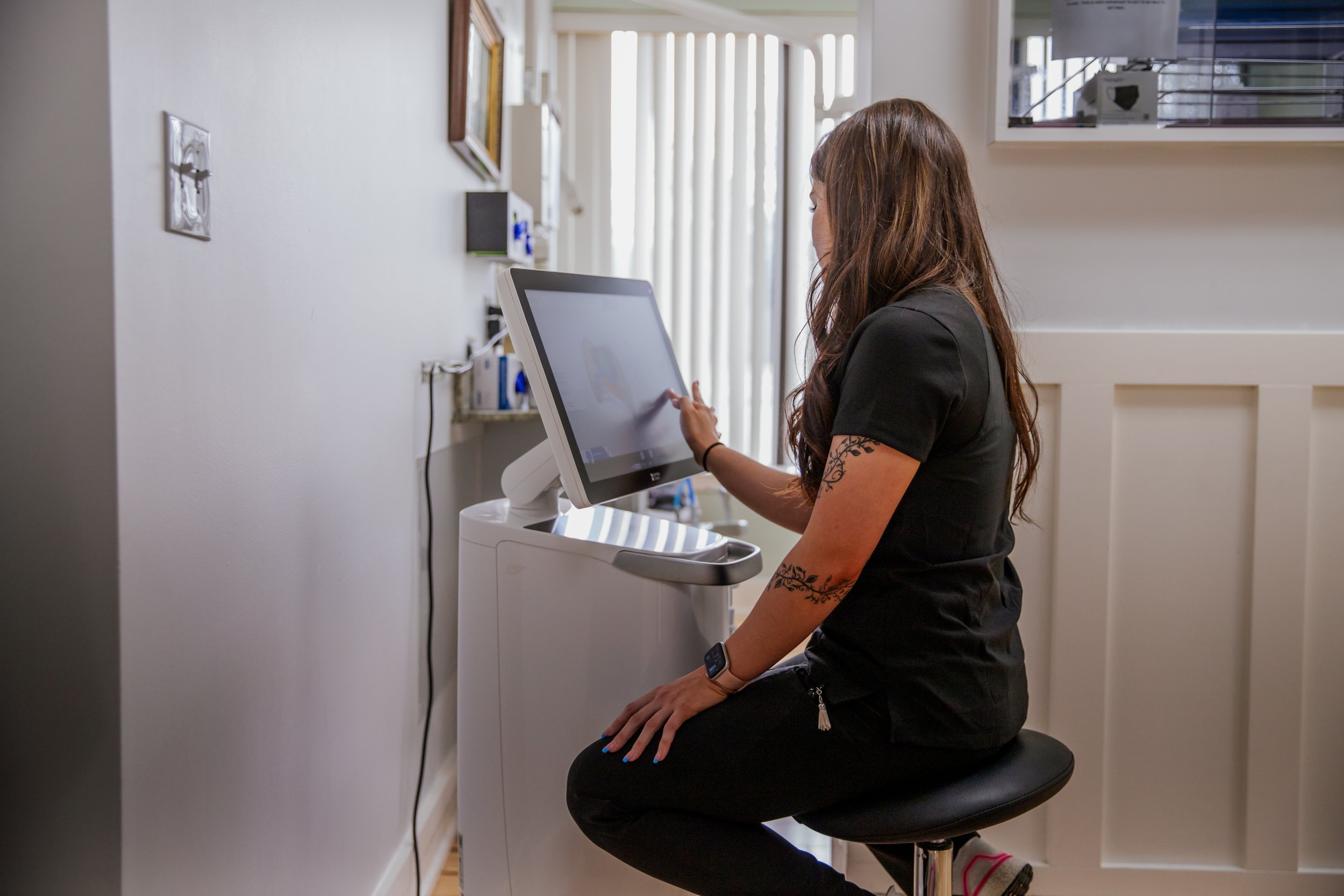
We place the implants, design the teeth on our own software, and print and finish them in our lab down the hall. One team, one plan, and if something needs adjusting we adjust it that day instead of shipping your case across the state. That is also why we can do same-day temporaries at all.
Frequently asked questions
How many implants does a full arch need? Usually four to six per arch. Four is common when the bone is good and the plan is a fixed bridge. Some cases call for six for extra support, and a snap-on denture can work with fewer. Your scan decides it, not a brochure.
Can I get both arches done? Yes, and plenty of people do. It can be done in one surgery or split into two, depending on your health and what you would rather go through. We will lay out both.
Do full-arch implants ever need replacing? The implants themselves are built to last decades. The teeth that sit on them are the wear item, the same way a crown is, and they may need repair or replacement down the line. That is normal maintenance, not a failure.
Is this the same thing as dentures? No. A traditional denture rests on your gums and moves. A full-arch implant restoration is anchored in bone. The snap-on version is a middle ground, and it is still anchored.
What if I already have dentures? Then you already know the problem. Existing denture wearers are often good candidates, though we do check how much the jaw has shrunk since the teeth came out, because that changes the plan.
Get a straight answer about your own jaw
Every full-arch case starts with the same question, which is what your bone can actually carry. That takes a scan and about an hour, and you will leave knowing where you stand instead of wondering. We are at 3747 E 11th St in Tulsa and we see patients from Broken Arrow, Owasso, Bixby, and Sand Springs.
Call or text (918) 834-2330, or request a consultation and we will call you back.