
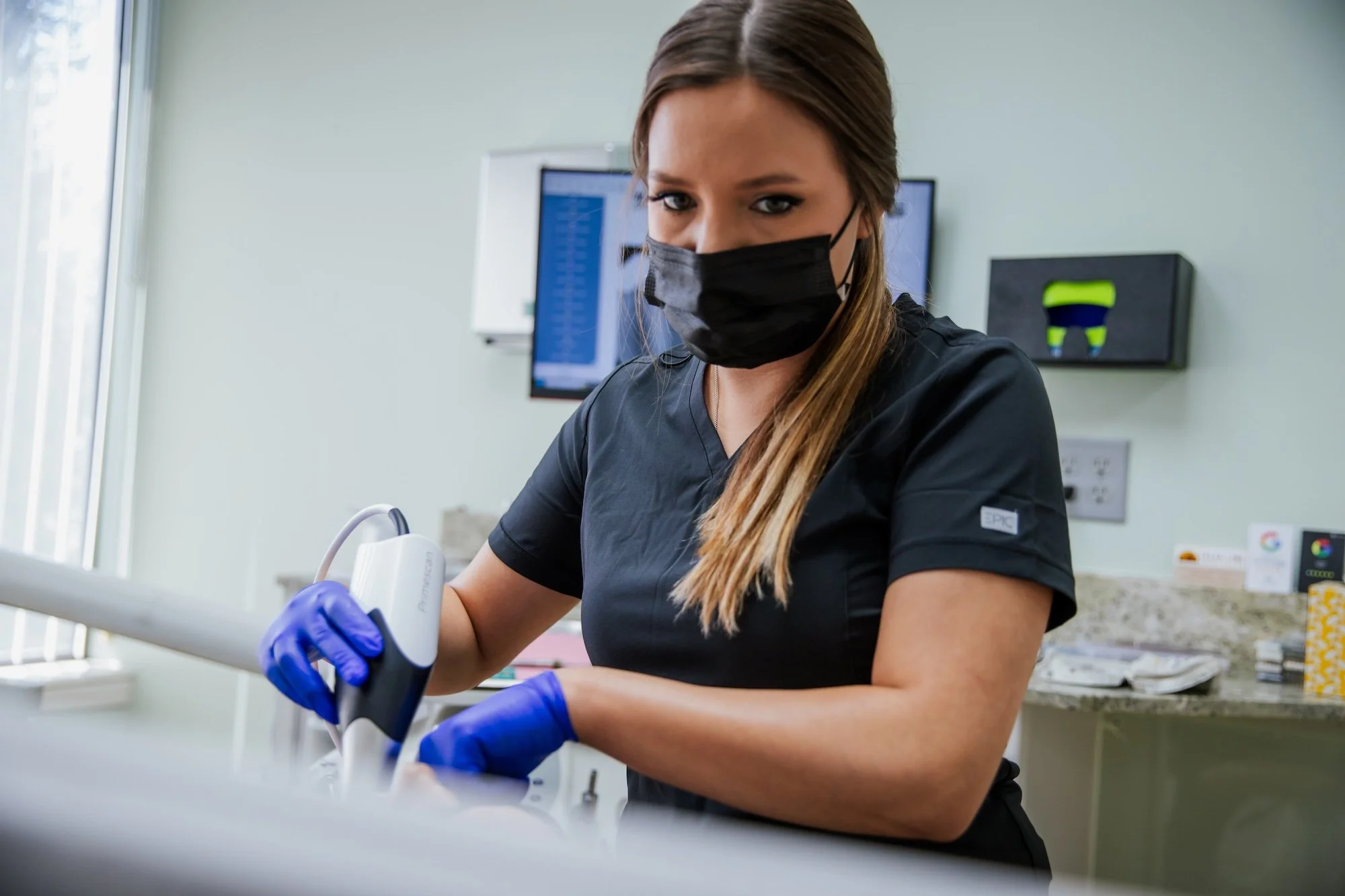
If the thought of the dentist makes your stomach drop, sedation can change everything. The right level lets you get the care you need without the fear, and there is more than one option. The three most common are laughing gas, oral sedation, and IV sedation. They differ in how deeply you relax and how long the effect lasts. Our sedation dentistry options in Tulsa cover all three, so we can match the method to how anxious you are and what work you are having done.
Here is the quick version: light nerves do well with laughing gas, moderate anxiety usually calls for oral sedation, and deep fear or a long procedure is where IV sedation shines. Now the detail.
Laughing gas (nitrous oxide)
This is the lightest option. You breathe it through a small nosepiece, it takes effect in minutes, and it wears off almost as fast once we stop it. You stay awake and aware, just calm and a little floaty.
The big advantage: it clears your system quickly, so you can usually drive yourself home and go back to your day. It is a good fit for mild nerves, routine cleanings that make you tense, or a single filling.
What it is not great for: deep anxiety or long, involved procedures. The calm is real but mild.
Oral sedation
Here you take a prescribed pill before your appointment. By the time you are in the chair, you feel drowsy and relaxed, and many patients remember little about the visit afterward. You are still awake enough to respond, just very calm.
This is the middle option, and it covers a lot of people. It works well for moderate anxiety and for longer appointments where laughing gas alone would not be enough. The catch: it lingers, so you need someone to drive you to and from the visit, and you take it easy the rest of the day.
IV sedation
With IV sedation, the medication goes in through a vein, which lets us control the depth precisely and keep you in a deep, comfortable state the whole time. Most patients remember almost nothing about the procedure. It is the deepest option short of full general anesthesia.
This is the choice for severe dental fear, for patients with a strong gag reflex, and for longer or more involved treatment like implant placement. Speaking of which, if you are weighing a bigger procedure, our dental implants page explains how sedation fits into that kind of treatment. Because we place implants in house, the same team that sedates you does the procedure, so nothing gets coordinated between offices.
You will need a driver for IV sedation, and you will rest the remainder of the day.
How to choose
A simple way to think about it:
Mild nerves, short visit: laughing gas
Moderate anxiety, longer visit: oral sedation
Severe fear, long or surgical procedure, or strong gag reflex: IV sedation
You do not have to figure this out alone. At your visit we go over your health history, your anxiety level, and the work you need, then recommend the lightest option that will actually keep you comfortable. If you want to read more about handling the fear itself, our post on overcoming dental anxiety is a good next step.
You do not have to dread the dentist
Plenty of our patients put off care for years because they were scared, then could not believe how easy the visit was with the right sedation. If that sounds like you, let us help you get back on track.
Call or text us at (918) 834-2330 to talk through your options, or reach out on our contact page.
Frequently asked questions
Will I be unconscious? Not with laughing gas or oral sedation. You stay awake but relaxed. IV sedation is much deeper, and most people remember little to nothing, but it is not the same as full general anesthesia.
Is sedation dentistry safe? Yes, when it is done by a trained team that monitors you throughout. We review your health history first and watch your vitals during the visit.
Can I drive myself home? After laughing gas, usually yes. After oral or IV sedation, no. You will need someone to drive you both ways and you should plan to rest that day.
Does sedation mean I won't feel any pain? Sedation handles anxiety and keeps you calm. We still use local anesthetic to numb the area, so the two work together for a comfortable visit.
Which sedation is best for implants or longer procedures? Oral or IV sedation is the usual choice for longer or surgical visits, since they keep you comfortable for the whole appointment. We will recommend the right level at your consultation.